Back to nature?
another extract from The Philosopher's Beach Book

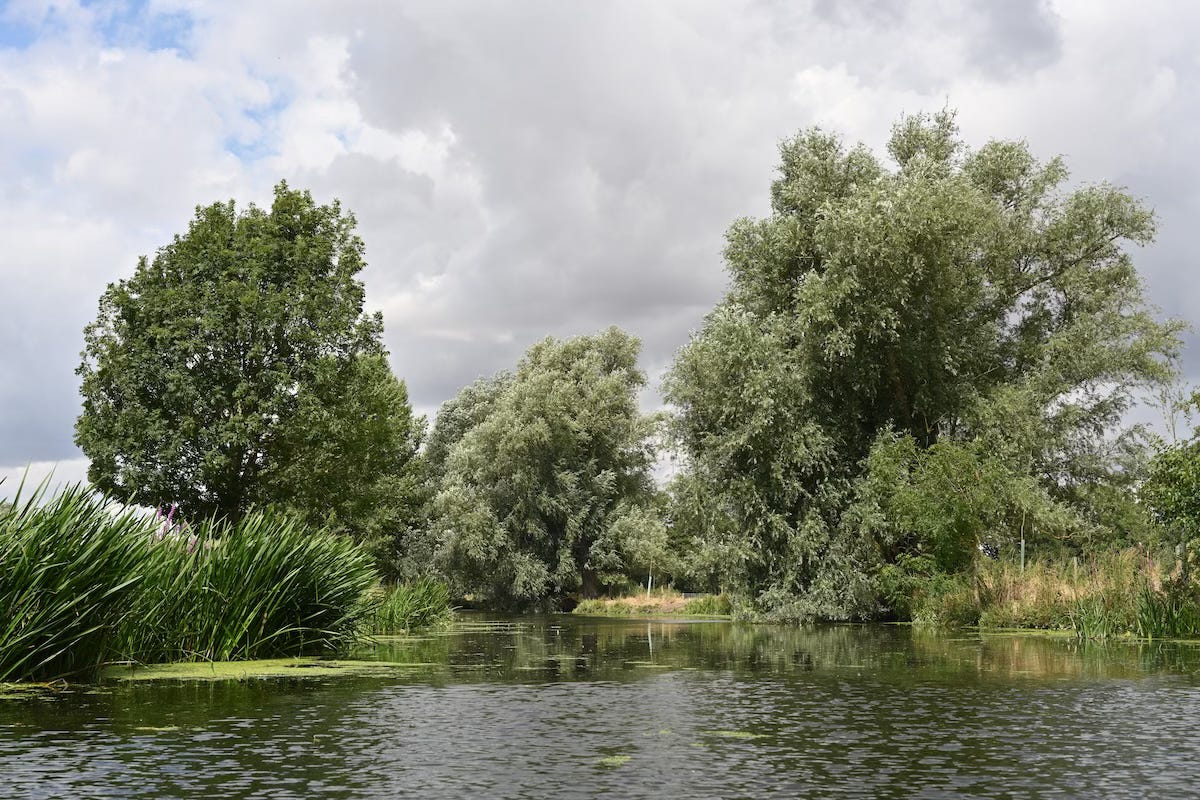
Early morning mist hangs over the mudflats, the silence broken only by the calling of wildfowl as the birds move along the edge of the water, feeding, taking to the air, then landing to feed again. I sit contentedly in the hide, binoculars at the ready, waiting. Then I feel a gentle trembling and a moment later I hear it – the unmistakable, bell-like, triple call of the Blackberry. (Editorial note: this piece was written in a previous decade!) I have an email. I may have come down to the sea again, and sense the running tide, and yet, for me, the wild call that cannot be denied is trumped by another. I reach into my pocket.
But should I? Which should take priority at this moment, nature or my personal network of communications? That may depend, of course, on whether I’m waiting for some vital piece of personal information, but leaving that possibility aside, is there a valid, perhaps an important case for turning the phone off before leaving society in order to commune silently with nature? After all, nature has long been a source of inspiration, whether through the Zen tradition of simple attention to the natural, or the eremitic tradition of western monasticism – seeking solitude in the more remote of places in order to find some ‘higher’ sense of meaning in life – to say nothing of its contribution in art, poetry and music. So should we turn off the clutter of thought and disengage from literal or imagined conversations when we engage with nature? Should we turn our backs on society in order to get into it, if only for a short ‘beach’ spell?
Getting back to nature, of course, is something of a misnomer; we never leave it. We breathe, we eat and drink; our bodies themselves are part of the natural world, with their own little ecosystems. The bacteria in my mouth and gut continue on their natural way whether I am having a day in the office or out here in the wilds. We remain part of nature from birth to death; the process of ageing and the threat of disease are constant reminders that the natural will finally trump to artificially constructed worlds of culture and self-esteem. To die is the most natural thing in the world, however much it may smash its way uninvited into our planned and ordered lives. Taking the healthy lifestyle option, going to the gym regularly, popping rows of supplements at the breakfast table – these may give us the sense that we are in charge of our own personal corner of the natural world, but one day, inevitably, we will be proved wrong.
So how do we get a proper perspective on these two overlapping worlds of nature and culture? Here are some random thoughts:
Ancient Greek temples display perfect geometric form, imposed on the natural chaos of a rocky hillside, a sign that civilisation has planted itself upon the landscape.
The builders of Stonehenge not only plotted and mapped the movement of the sun, but organised upon the surface of the earth a pattern to reflect their world.
In the 18th century, formal gardens tamed nature; plants, trees and lawns were strictly ordered and set out. Man, assumed to be the measure of all things, measured and laid out an alternative form of nature, through which one could wander and enjoy beauty without encountering the chaotic or the threatening.
The romantics of the 19th century sought to integrate their own emotional lives with the flow of nature; to be wild in a carefully thought-out way; to give a sense of naturalness to a garden, enhancing nature to please the senses; to build a new ruin, or an appropriately named ‘folly’ on a manicured hillside or to one side of a lake, in a way that is pleasing to the eye. Nature, it was still assumed, could always be enhanced.
Just as the old ‘Natural Law’ approach to ethics did not simply describe how creatures (including humans) behaved in nature, but rather set out to consider how they should behave in a nature interpreted by reason, so the formal gardens of the 18th century or the romantic ones of the 19th assumed that nature was just waiting for human interpretation and improvement.
Bonzai – nature at its most contorted; the result of carefully controlled arboreal torture. Enough said.
Topiary – don’t get me going on that daft, transformational fantasy!
And by the end of the 20th century, aware of what damage the human species is doing to the rest of the natural world, we develop Astroturf, where nature lacks green, all-weather durability, and take eco holidays, exploring the wild in five star luxury.
The fact that we live simultaneously in the worlds of nature and culture is reflected in our description of people – some are mannered, others natural; some artificial, others genuine; some intellectual, others intuitive. But, like the bonsai, we may feel that our growth has been shaped and contorted to fit a pre-established idea of what we should be. Education – that brilliant method of passing information and life-skills from one generation to the next, without which the whole edifice of cultural life and civilisation would have been impossible – is also the tool for easing us from the exclusively natural world into the world of the mind, culture and society. Civilisation is human topiary! Okay, so that’s all a gross oversimplification and one-sided view of the relationship, but it at least raises the question of how we relate to the natural world.
Yet there is something wonderful about getting back into the natural state. Walking through wild, untamed countryside, sensing its natural acceptance of us but also its threat, we recognise the value of the natural world for itself and not just for what it offers to the human species. The philosopher Peter Singer claims that to privilege the human species above others is ‘speciesism’, to be rejected along with racism and sexism. Nature should not just be evaluated on a utilitarian basis for what it can offer us – although rainforests may indeed hold secrets for future drugs, and biodiversity may ensure the long-term stability and health of our evolving ecosystem. Humans are a recent arrival on this planet. For millions of years nature was free from human interpretation or interference; in the long-term future, when the human species will have died out, nature will continue, albeit in a form we cannot imagine.
Jean-Jaques Rousseau (1712-78) considered that we are all born into a state of natural goodness, later to be corrupted by the temptations of society. Others, particularly Thomas Hobbes (1588-1879) saw the natural state, with all normal social restraints removed, as one in which life would be, as he famously put it, ‘nasty, brutish and short.’ Are we innocents corrupted by society, or savages tamed by it? The jury is still out on that one – and so it will always be, since we cannot view ourselves in a totally natural state. We have evolved into social creatures, see everything through that social prism, and cannot pretend to know how we would have been if it had not happened. We can no more know how we would have been without society, than we can know how we would have been if we had not been born. We inhabit the social world and there is no going back; our language, our thoughts, our appreciation of nature itself is steeped in a cultural and intellectual heritage that we cannot shake off.
Nature, of course, is far from benign. When Nietzsche spoke of a return to nature, he indicated that it was more an ‘ascent up into the high, free, even terrible Nature and naturalness’. Nature as a whole is indifferent to its various forms of life, its huge vitality destroys that which it produces. It is humankind that seeks to find comfort in a rationalisation of nature, an attempt (from the Stoic ‘logos’ or principle of reason, to the idea of a creator God) to make our place in the world bearable. In fact, nature is indifferent to us and all else. The universe is not a comfortable, reasonable place. Nature is what remains when all rational and supernatural principles have been removed, and we encounter the world without their comforting presuppositions.
Returning to nature involves leaving the comfort blanket of control and reason to enter into a zone where creatures eat and are eaten, where they breed and are slaughtered. Of course, as we said at the beginning, we live in that world all the time, it is just that we choose to see ourselves as in a world where reason delivers the good life.
So do you really want to enter into raw nature, or would you prefer to see it through rational, moral, purposeful glasses? As soon as we philosophise about nature, we impose our ideas upon it. There are many opportunities within philosophy to explore this – from the Greek distinction between nomos and physis (order and nature) to Nietzsche’s contrast of Apollo and Dionysus, life and nature, and perhaps even to the philosophical and psychological responses to Darwin’s theory of natural selection. Nature is a constant threat waiting to be reasoned away.
So, here I am in the hide, knowing – although I cannot see it – that the little red light is flashing in my pocket. Do I reach for the phone? Even if I know that, statistically, it is most likely to be an email trying to sell me something, reminding me that my subscription is due, or that there is a special, internet-only offer available until the end of the month, I still hope that the message may be personal; that someone still wants to contact me; that out here on the mudflats, I am still in touch with the social world. Someone may need me urgently; something may be wrong at work; it may be an old friend wanting to get into contact again. There is comfort in that world, and in the ongoing story that is our life.
But in the moments of solitude, with wind coming off the saltmarsh and no sounds but those of the birds, there is a sense of self and of the place of human life in a greater ‘scheme of things’ – until I catch myself, with that very phrase, trying to avoid uninterpreted nature.
[For more information about this book, along with a full list of topics, please visit its page on the essexthinker.com website by clicking here.]